

Hand Plastic Surgery in Jaipur: A Complete Guide by Dr. Nitesh Lamoria
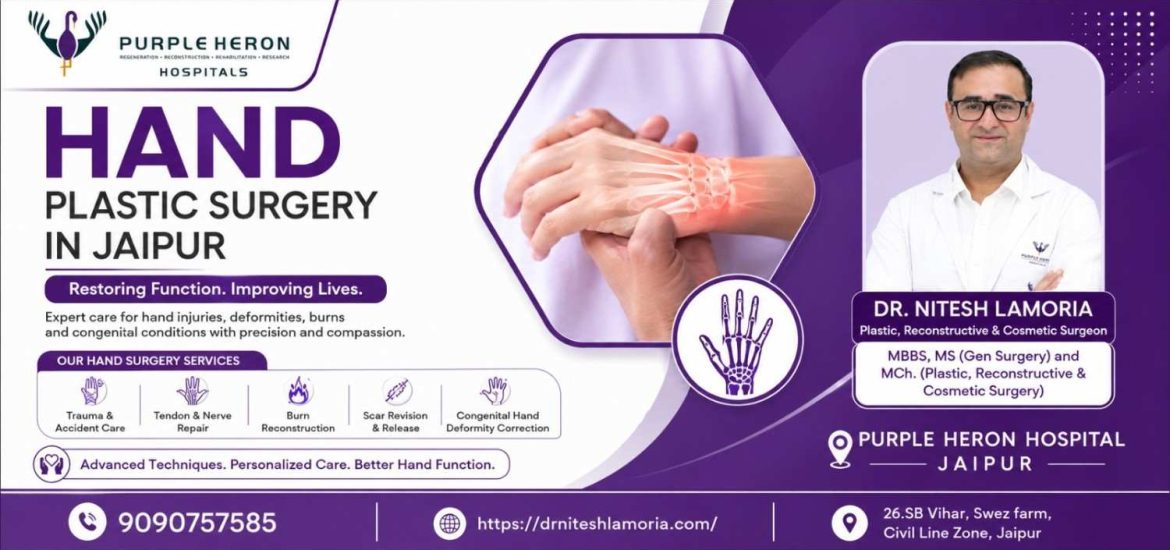
Hands play an essential role in almost every aspect of daily life, from writing and working to eating, driving, and performing precise movements. An injury, burn, congenital condition, nerve problem, or deformity can therefore affect both hand function and appearance. Hand Plastic Surgery in Jaipur involves specialized surgical and reconstructive techniques designed to restore movement, improve function, repair damaged tissues, and, where possible, enhance the appearance of the hand.
Dr. Nitesh Lamoria provides individualized assessment and surgical care for patients with various hand-related concerns at Purple Heron Hospital, Jaipur. Depending on the condition, treatment may involve repairing tendons, nerves, soft tissues, scars, or other damaged structures.
Understanding Hand Plastic Surgery in Jaipur
Hand plastic surgery is a specialized area of plastic and reconstructive surgery that focuses on conditions affecting the hand, wrist, fingers, skin, soft tissues, nerves, and tendons. Because the anatomy of the hand is complex, treatment requires careful planning to preserve or restore movement, sensation, strength, and coordination.
The primary goals of hand surgery may include:
- Restoring hand and finger movement
- Repairing injured tendons, nerves, or soft tissues
- Improving hand function after trauma
- Managing scars and contractures
- Correcting certain congenital hand abnormalities
- Reconstructing tissues damaged by burns or accidents
- Improving appearance when deformity affects the shape of the hand
- Helping patients return to routine personal and professional activities
The exact treatment depends on the type and severity of the condition.
Conditions That May Require Hand Plastic Surgery
Not every hand problem requires surgery. However, surgical intervention may be considered when conservative treatment is insufficient or when an injury requires immediate structural repair.
1. Traumatic Hand Injuries
Accidents at home, work, or on the road can damage the skin, tendons, nerves, blood vessels, bones, and other tissues of the hand. Complex injuries may require reconstructive surgery to restore damaged structures and preserve function.
2. Tendon Injuries
Tendons connect muscles to bones and help control finger and hand movements. Deep cuts, crush injuries, and other trauma can partially or completely damage tendons. Surgical tendon repair may be recommended when normal movement is significantly affected.
3. Nerve Injuries
Hand nerves are responsible for sensation and contribute to muscle function. When nerves are cut, compressed, or severely damaged, patients may experience numbness, weakness, altered sensation, or difficulty moving certain parts of the hand. Depending on the injury, nerve repair or reconstruction may be considered.
4. Burns and Burn Contractures
Deep burns can lead to scarring and tightening of the skin. This may restrict finger or wrist movement. Reconstructive procedures can help release contractures and improve mobility, depending on the extent of tissue damage.
5. Hand Scars
Raised, tight, painful, or restrictive scars may affect both appearance and function. Scar revision techniques may be considered when a scar causes functional limitations or significant cosmetic concerns.
6. Congenital Hand Conditions
Some individuals are born with differences in the development of the fingers or hands. Treatment depends on the specific condition, its functional impact, the patient’s age, and other clinical considerations.
Common Procedures in Hand Plastic Surgery in Jaipur
The surgical technique is selected only after a detailed examination and diagnosis. Some commonly used approaches include:
- Tendon Repair: Damaged or severed tendons may be surgically repaired to help restore finger or hand movement.
- Nerve Repair: Injured nerves may require direct repair or, in selected cases, reconstruction to support recovery of sensation and function.
- Scar Revision: Specific surgical techniques may improve restrictive or prominent scars and help restore mobility.
- Skin Grafting: Healthy skin may be transferred from another area of the body to cover wounds or areas where skin has been lost.
- Flap Surgery: Skin and underlying tissue with its blood supply may be transferred to reconstruct complex hand defects.
- Contracture Release: Tight scar tissue, particularly after burns, may be released to improve the range of motion.
- Soft-Tissue Reconstruction: Complex injuries may require reconstruction to provide adequate coverage and support healing.
The most appropriate procedure varies considerably between patients.
About Dr. Nitesh Lamoria
Dr. Nitesh Lamoria is a Plastic, Reconstructive and Cosmetic Surgeon associated with Purple Heron Hospital in Jaipur. His educational qualifications include MBBS, MS (General Surgery), and M.Ch. (Plastic, Reconstructive & Cosmetic Surgery).
His approach to hand reconstruction focuses on understanding the extent of tissue damage, the patient’s functional requirements, and realistic surgical outcomes before recommending treatment. Since hand surgery often involves delicate structures, careful surgical planning and appropriate rehabilitation are important parts of the overall treatment process.
How Is Hand Surgery Planned?
Before undergoing Hand Plastic Surgery in Jaipur, patients generally receive a comprehensive evaluation. The process may include:
- Clinical Examination: The hand is examined for movement, strength, sensation, circulation, scars, wounds, and structural abnormalities.
- Understanding the Injury or Condition: The surgeon assesses whether the concern involves tendons, nerves, skin, soft tissue, bones, or a combination of structures.
- Diagnostic Tests: Imaging or other investigations may be recommended when necessary to understand the extent of an injury.
- Treatment Planning: Based on the diagnosis, the surgeon discusses suitable surgical or non-surgical treatment options.
- Expected Outcomes: Patients should receive realistic information regarding recovery, possible improvement, limitations, risks, and rehabilitation requirements.
What to Expect After Hand Plastic Surgery
Recovery depends heavily on the type of procedure and the severity of the original condition. A minor scar procedure, for example, generally has a different recovery process from complex tendon, nerve, or soft-tissue reconstruction.
After surgery, patients may be advised to:
- Keep the operated area protected and clean
- Take prescribed medicines as instructed
- Avoid unnecessary pressure on the hand
- Attend scheduled follow-up appointments
- Use a splint or dressing when recommended
- Begin physiotherapy or hand therapy at the appropriate stage
- Perform prescribed exercises carefully
- Avoid heavy lifting until medically cleared
Swelling, stiffness, and temporary discomfort may occur during recovery. Following postoperative instructions is important for safe healing.
Importance of Rehabilitation After Hand Surgery
Surgery is often only one part of hand reconstruction. Rehabilitation can be equally important for restoring useful movement.
Depending on the procedure, physiotherapy or specialized hand therapy may help with:
- Improving flexibility
- Reducing stiffness
- Restoring range of motion
- Gradually rebuilding strength
- Supporting tendon movement
- Improving coordination
- Helping the patient return to routine activities
Patients should not begin strenuous exercises independently after surgery. Rehabilitation needs to follow the timeline recommended by the treating surgeon and therapist.
Choosing a Surgeon for Hand Plastic Surgery in Jaipur
Because the hand contains multiple small and closely connected structures, choosing an appropriately qualified surgeon is important. Before proceeding with treatment, consider:
- The surgeon’s qualifications and training
- Experience in plastic and reconstructive procedures
- Ability to manage complex tissue injuries
- Availability of appropriate hospital facilities
- Clear explanation of treatment options
- Focus on both functional and reconstructive outcomes
- Postoperative care and rehabilitation planning
- Transparent discussion of possible risks and realistic results
At Purple Heron Hospital, Dr. Nitesh Lamoria evaluates each patient’s condition individually before determining an appropriate treatment approach.
When Should You Consult a Hand Surgeon?
A specialist assessment may be appropriate if you experience:
- Loss of finger or hand movement after an injury
- Persistent numbness or weakness
- A deep cut involving the hand or fingers
- A severe burn affecting hand movement
- Tight scars that restrict mobility
- Significant soft-tissue damage
- Hand deformity following an accident
- A congenital condition affecting hand function
Some hand injuries require prompt medical attention. Deep cuts, severe crush injuries, uncontrolled bleeding, loss of sensation, or sudden inability to move a finger should not be delayed.
Final Thoughts
Hand Plastic Surgery in Jaipur can involve much more than improving appearance. In many cases, its primary purpose is to reconstruct damaged structures and help restore movement, sensation, strength, and everyday hand function.
Dr. Nitesh Lamoria provides assessment and reconstructive surgical care at Purple Heron Hospital, Jaipur. Since every hand injury or deformity is different, a detailed clinical evaluation is essential to determine whether surgery is required and which procedure may provide an appropriate outcome.
Patients considering hand surgery should discuss the expected benefits, potential risks, recovery period, rehabilitation requirements, and realistic outcomes with their surgeon before making a treatment decision.
Frequently Asked Questions (FAQs)
1. What conditions can be treated with Hand Plastic Surgery in Jaipur?
Hand plastic surgery may be used to manage traumatic injuries, tendon or nerve damage, burns, restrictive scars, soft-tissue defects, and certain congenital hand conditions. The appropriate treatment depends on the diagnosis and severity of the problem.
2. How long does recovery take after hand plastic surgery?
Recovery varies according to the procedure and extent of the injury. Some patients may recover within several weeks, while complex tendon, nerve, or reconstructive procedures can require a longer period of healing and rehabilitation.
3. Is physiotherapy necessary after hand plastic surgery?
Physiotherapy or hand therapy is commonly recommended after many reconstructive hand procedures. It can help improve movement, reduce stiffness, restore strength, and support functional recovery. The timing and duration should be determined by the treating medical team.