

Transgender Surgery in India: A Complete Guide by Dr. Nitesh Lamoria
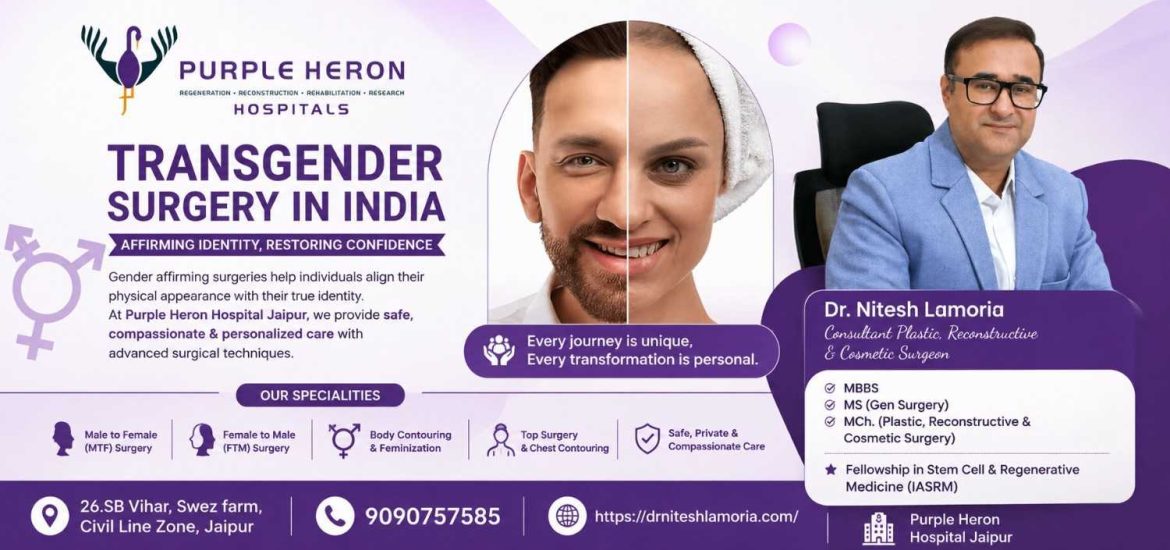
Choosing gender-affirming surgery is a deeply personal decision. For many people, the journey begins with questions: Which procedures are available? How should I choose a surgeon? What happens before surgery? How long is recovery? And most importantly, how can I make an informed and confident decision?
If you are exploring Transgender Surgery in India, having reliable information about surgical options, preparation, recovery, potential risks, and hospital care is essential. Dr. Nitesh Lamoria provides plastic, reconstructive, and gender-affirming surgical care at Purple Heron Hospital in Jaipur, Rajasthan, with an emphasis on individualized planning, patient safety, privacy, and realistic expectations.
What Does Transgender Surgery in India Include?
There is no single procedure called transgender surgery. Gender-affirming surgical care can involve different procedures selected according to an individual’s goals, anatomy, overall health, and medical assessment.
Some people may choose only one procedure, while others may consider multiple surgeries over time. Importantly, surgery is an individual choice and is not a requirement for a person’s gender identity.
Depending on individual goals, procedures may include:
- Chest or breast surgery
- Genital reconstruction
- Facial feminization or masculinization procedures
- Body contouring
- Supporting plastic and reconstructive procedures
A consultation helps patients understand which procedures may be appropriate and what each option involves.
Male-to-Female (MTF) Gender-Affirming Surgery
Male-to-female gender-affirming procedures are designed to modify selected physical characteristics according to the patient’s goals.
Breast Augmentation
Breast augmentation may be considered to create or enhance breast volume and contour. Implant selection and surgical planning depend on factors such as chest anatomy, existing breast tissue, body proportions, and the desired outcome.
Vaginoplasty
Vaginoplasty is a complex genital reconstruction procedure intended to create female genital anatomy. Because it involves detailed reconstructive techniques and significant postoperative care, patients need to understand the surgical process, possible complications, recovery, and long-term care before proceeding.
Facial Feminization Procedures
Facial procedures can be planned to modify specific features and create a more feminine facial appearance. Rather than changing every facial feature, treatment can be tailored to areas that are most important to the individual.
Body Contouring
Body contouring procedures may be considered to modify proportions in selected areas. The exact surgical approach depends on existing anatomy and treatment goals.
Female-to-Male (FTM) Gender-Affirming Surgery
For transgender men, surgical care may focus on chest contouring, genital reconstruction, or other procedures based on individual goals.
Common options can include:
- Chest masculinization or top surgery
- Hysterectomy in appropriate cases
- Metoidioplasty
- Phalloplasty
- Body contouring
- Additional reconstructive procedures
Some complex procedures may require multiple surgical stages. Therefore, understanding the complete treatment pathway before starting is particularly important.
7 Things to Know Before Choosing Transgender Surgery in India
Making an informed decision is about much more than comparing treatment costs. Consider these important factors before selecting your surgeon and hospital.
1. Check the Surgeon’s Qualifications
Gender-affirming procedures can involve advanced plastic and reconstructive surgical techniques. Verify your surgeon’s medical education, specialist qualifications, and relevant surgical training.
2. Discuss Your Goals Openly
Every patient’s expectations are different. Explain which physical changes matter most to you so that the surgeon can discuss what may realistically be achieved.
3. Understand the Exact Procedure
Ask how the surgery will be performed, where incisions may be placed, what scars may look like, and whether additional procedures could be required.
4. Ask About Recovery Before Surgery
Recovery planning is particularly important if you are travelling to another city. Ask about hospital stay, follow-up visits, activity restrictions, and when travel may be considered appropriate.
5. Understand Potential Risks
Every surgical procedure carries risks. Your consultation should include an understandable discussion about common and procedure-specific complications.
6. Consider Long-Term Aftercare
Certain gender-affirming procedures can require ongoing postoperative care. Ask what care may be required weeks, months, or longer after surgery.
7. Never Choose on Price Alone
Cost is naturally an important consideration, but surgeon qualifications, hospital facilities, surgical planning, anesthesia, postoperative monitoring, and follow-up care should also influence your decision.
Meet Dr. Nitesh Lamoria – Education & Surgical Expertise
Dr. Nitesh Lamoria has completed MBBS, MS (General Surgery), and MCh (Plastic, Reconstructive & Cosmetic Surgery) from SMS Medical College, Jaipur. He has also undertaken a Fellowship in Stem Cell & Regenerative Medicine (IASRM).
His background in plastic and reconstructive surgery supports his work across reconstructive, aesthetic, body contouring, and gender-affirming procedures.
For patients considering transgender surgery, treatment planning begins with understanding individual goals, anatomy, overall health, and realistic surgical possibilities.
Gender-Affirming Surgery at Purple Heron Hospital, Jaipur
Dr. Nitesh Lamoria provides consultations and surgical care at Purple Heron Hospital, located in Jaipur, Rajasthan, India.
Having surgery in an appropriate hospital setting is important because gender-affirming procedures may involve anesthesia, postoperative monitoring, wound care, pain management, and scheduled follow-ups.
For patients travelling to Jaipur from other parts of India or abroad, planning should also include accommodation, the recommended duration of stay, postoperative appointments, and safe travel arrangements after surgery.
What Happens Before Transgender Surgery in India?
A carefully planned surgical journey generally begins well before the operation.
Consultation and Goal Discussion
The first stage involves discussing your goals and understanding what you want from surgery. Your surgeon can then explain relevant options and limitations.
Medical Assessment
Your health history, medications, previous surgeries, allergies, and other medical factors may be reviewed. Necessary investigations can then be recommended according to the planned procedure.
Surgical Planning
Once suitability is established, the surgeon can explain the proposed technique, expected scars, anesthesia, hospital stay, recovery period, and follow-up schedule.
Informed Consent
Before surgery, patients should have an opportunity to understand potential benefits, limitations, alternatives, and complications and ask any remaining questions.
What Is Recovery Like?
Recovery is different for every procedure. A chest procedure, for example, has a different recovery pathway from complex genital reconstruction.
Depending on the operation, patients may experience temporary swelling, bruising, discomfort, tightness, or changes in sensation.
During recovery, patients may be advised to:
- Take prescribed medicines correctly
- Follow wound-care instructions
- Avoid strenuous activity until medically cleared
- Attend scheduled follow-ups
- Follow procedure-specific hygiene instructions
- Watch for unusual symptoms
- Avoid smoking or nicotine as advised
- Follow long-term aftercare recommendations
Trying to rush recovery can interfere with healing. Follow the instructions provided by your surgical team rather than relying on generalized online recovery timelines.
What Results Can You Expect?
One of the most important parts of Transgender Surgery in India is setting realistic expectations.
Surgery can modify physical characteristics, but outcomes depend on anatomy, healing response, procedure type, surgical technique, and other individual factors. Scarring is also a normal part of surgical healing, although its appearance can change over time.
A responsible surgeon should explain both what a procedure may achieve and what it cannot guarantee.
Questions Worth Asking Your Surgeon
Before making your final decision, ask questions such as:
- Which procedure would be appropriate for my goals?
- What technique would you recommend?
- Where will the surgery be performed?
- What scars should I expect?
- How long might I need to stay in Jaipur?
- What are the possible complications?
- When can I return to everyday activities?
- What postoperative care will I need?
- Could revision surgery ever be necessary?
- How many follow-up visits should I plan for?
A good consultation should leave you better informed rather than pressured to make an immediate decision.
FAQs About Transgender Surgery in India
Can all gender-affirming procedures be performed at once?
Not necessarily. The surgical plan depends on the procedures involved, overall health, anatomy, and safety considerations. Complex reconstruction may be planned in stages.
How long does transgender surgery recovery take?
There is no single recovery period because different procedures require different healing timelines. Your surgeon should provide a procedure-specific recovery plan during consultation.
Where does Dr. Nitesh Lamoria perform gender-affirming surgery?
Dr. Nitesh Lamoria provides consultations and surgical care at Purple Heron Hospital, Jaipur, Rajasthan, India. Patients travelling from another city should discuss how long they may need to remain in Jaipur for postoperative monitoring.
Take the Next Step with the Right Information
Choosing Transgender Surgery in India is not simply about selecting a procedure—it is about understanding your options, finding appropriately qualified surgical care, preparing for recovery, and making decisions based on your individual goals.
Dr. Nitesh Lamoria provides gender-affirming surgical consultations at Purple Heron Hospital in Jaipur. During consultation, patients can discuss their goals, available surgical options, expected outcomes, potential risks, recovery, and aftercare before deciding how they would like to proceed.
If you are considering gender-affirming surgery, a detailed consultation can be the first step toward developing an individualized and medically appropriate surgical plan.