How to Choose the Right Surgeon for Rhinoplasty Surgery in Jaipur
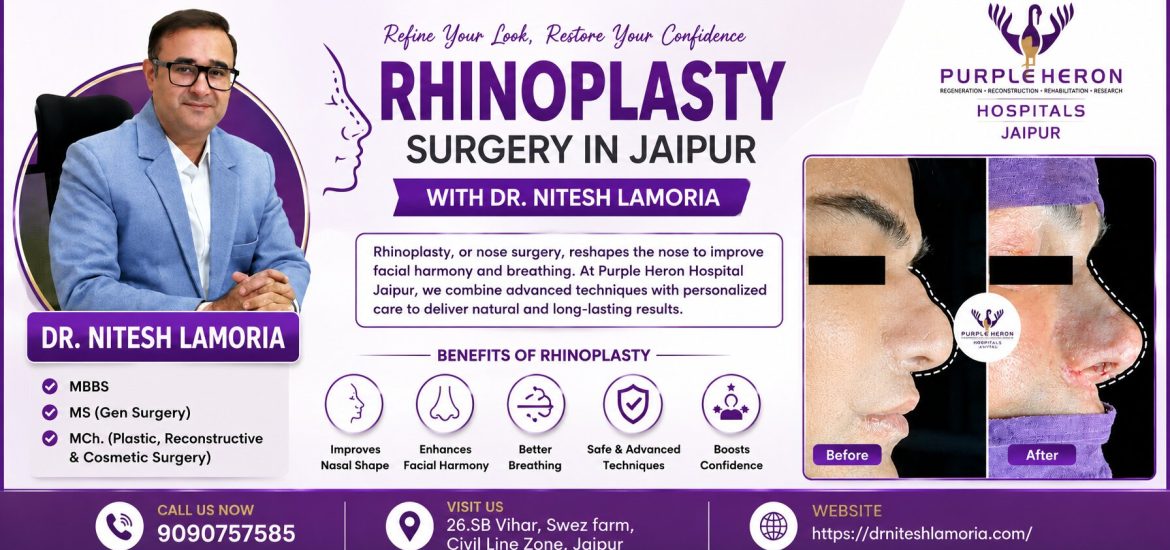
Rhinoplasty is a specialized plastic surgery procedure that can change the shape, proportion, and structure of the nose. In some patients, it may also be performed to address functional concerns related to nasal airflow. Because even small structural changes can influence facial appearance and nasal function, choosing an appropriately qualified and experienced surgeon is an important part of planning Rhinoplasty Surgery in Jaipur.
A good rhinoplasty outcome is not simply about making the nose smaller or changing its shape. The goal should be to create a nose that looks balanced with the rest of the face while preserving or improving function whenever necessary.
For patients considering rhinoplasty, understanding a surgeon’s qualifications, experience, approach, technology, and follow-up care can help them make a more informed decision.
Why Choosing the Right Surgeon for Rhinoplasty Surgery in Jaipur Matters
Rhinoplasty is considered technically demanding because the surgeon works with several interconnected structures, including nasal bone, cartilage, skin, and the internal nasal framework. Each patient’s anatomy is different, which means surgery needs to be carefully individualized.
An appropriately planned procedure may help:
- Improve nasal shape and facial proportion
- Correct a prominent nasal hump
- Refine a broad, bulbous, or asymmetrical nasal tip
- Address a nose that appears too wide or disproportionate
- Correct certain structural irregularities
- Improve nasal airflow when functional problems are present
- Restore nasal shape following selected injuries or previous surgery
Therefore, patients looking for Rhinoplasty Surgery in Jaipur should evaluate the surgeon based on medical credentials and rhinoplasty expertise rather than choosing solely according to cost or promotional claims.
1. Check the Surgeon’s Medical Qualifications
The first step is to verify that the surgeon has appropriate medical and surgical training. Rhinoplasty should be performed by a surgeon with recognized training relevant to plastic, reconstructive, and aesthetic surgery.
Dr. Nitesh Lamoria holds MBBS, MS (General Surgery), and MCh (Plastic, Reconstructive & Cosmetic Surgery) qualifications from SMS Medical College, Jaipur. He has also completed a Fellowship in Stem Cell & Regenerative Medicine (IASRM).
When comparing surgeons, patients should look beyond titles and understand the doctor’s formal surgical education, specialized training, and experience with nasal procedures.
2. Look for Specific Experience in Rhinoplasty
General surgical experience and rhinoplasty-specific experience are not the same. Nose surgery requires a detailed understanding of both facial aesthetics and nasal anatomy.
During a consultation, consider asking:
- How frequently does the surgeon perform rhinoplasty?
- Does the surgeon perform both cosmetic and functional procedures?
- How are different nose shapes and facial proportions assessed?
- What approach would be suitable for your anatomy?
- How are realistic expectations established before surgery?
An experienced surgeon should be able to explain why a particular surgical plan is appropriate instead of recommending the same technique for every patient.
3. Choose a Surgeon Who Prioritizes Natural-Looking Results
Successful rhinoplasty should complement the patient’s facial features rather than create an artificial or standardized nose.
Important factors considered during surgical planning can include:
- Facial proportions
- Nasal width and length
- Nasal bridge profile
- Tip shape and projection
- Skin thickness
- Chin and forehead relationship
- Nasal symmetry
- Internal nasal support
At Purple Heron Hospital Jaipur, Dr. Nitesh Lamoria follows an individualized approach to rhinoplasty planning, with attention to facial balance, nasal structure, and the patient’s specific concerns.
4. Ask About Advanced Techniques Used for Rhinoplasty Surgery in Jaipur
Modern rhinoplasty may involve different surgical techniques depending on nasal anatomy and the changes required. No single advanced technique is appropriate for every patient. Therefore, technology should support a carefully selected surgical plan rather than replace surgical expertise.
Piezotome-Assisted Rhinoplasty
One advanced technology that may be used in selected rhinoplasty procedures is a Piezotome, which uses ultrasonic energy to assist with precise reshaping or cutting of nasal bone.
Compared with conventional bone instruments, ultrasonic techniques can allow controlled work on bony structures while helping the surgeon limit unintended trauma to surrounding soft tissues.
Potential advantages in appropriately selected cases may include:
- Precise bone reshaping
- Controlled osteotomies
- Greater accuracy while working on nasal bones
- Reduced trauma to surrounding soft tissues in certain procedures
However, suitability depends on the patient’s anatomy and the type of correction required.
Open Rhinoplasty
In open rhinoplasty, a small external incision is generally made across the columella along with internal incisions. This provides wider surgical exposure and may be useful when significant tip modification, structural reconstruction, or complex correction is required.
Closed Rhinoplasty
Closed rhinoplasty uses incisions placed inside the nostrils. It avoids an external columellar incision and may be appropriate for selected patients requiring specific modifications. The choice between open and closed rhinoplasty depends on anatomy and surgical goals.
Structural Rhinoplasty
Structural rhinoplasty focuses on reshaping the nose while maintaining or rebuilding adequate structural support. Cartilage grafting may be considered when additional support or contouring is required.
Septorhinoplasty
When cosmetic concerns coexist with structural problems affecting nasal breathing, septal correction may sometimes be combined with rhinoplasty. This is known as septorhinoplasty. A clinical examination is required to determine whether functional correction is necessary.
5. Evaluate the Quality of the Consultation
A detailed consultation is one of the most important stages before Rhinoplasty Surgery in Jaipur.
Rather than immediately recommending surgery, the surgeon should assess:
- Medical history
- Previous nasal surgery or trauma
- Current breathing concerns
- Nasal anatomy
- Skin and soft-tissue characteristics
- Facial proportions
- Patient expectations
- Desired aesthetic changes
Patients should also have an opportunity to explain what they dislike about their nose and what they hope surgery will achieve.
A responsible surgeon should discuss what can realistically be changed and what limitations may exist.
6. Review Before-and-After Cases Carefully
Before-and-after photographs can help patients understand a surgeon’s aesthetic approach and the types of cases they have treated.
Instead of searching for a patient whose nose looks exactly like yours, pay attention to whether results generally appear:
- Balanced with the face
- Proportionate
- Natural rather than over-corrected
- Appropriate for the patient’s individual features
Remember that another patient’s result cannot predict your own outcome because anatomy, healing, skin thickness, and surgical requirements vary.
7. Consider Hospital Safety and Surgical Facilities
The surgical environment is another important consideration when choosing where to undergo rhinoplasty.
Patients should ask about:
- Preoperative evaluation
- Anaesthesia arrangements
- Sterilization protocols
- Surgical facilities
- Postoperative monitoring
- Emergency preparedness
- Follow-up arrangements
At Purple Heron Hospital Jaipur, rhinoplasty planning includes preoperative assessment, individualized surgical planning, and postoperative follow-up under medical supervision.
8. Understand Recovery Before Making a Decision
Recovery differs among patients and depends on the extent of surgery performed. Swelling and bruising are common during the early recovery period. A nasal splint may also be used temporarily when indicated.
Although much of the initial swelling gradually decreases, subtle swelling—particularly around the nasal tip—can persist for several months. The nose continues to refine as tissues heal, so final results should not be judged immediately after surgery.
Patients should follow their surgeon’s instructions regarding:
- Wound and nasal care
- Medications
- Sleeping position
- Physical activity
- Wearing glasses, when relevant
- Follow-up appointments
- Returning to work and exercise
9. Do Not Choose Rhinoplasty Based Only on Cost
Cost is understandably an important consideration, but it should not be the primary factor when selecting a surgeon.
The overall cost of rhinoplasty can vary according to:
- Complexity of the procedure
- Surgical technique
- Functional correction required
- Anaesthesia
- Hospital and operating-room requirements
- Primary versus revision rhinoplasty
A proper consultation is usually necessary before an individualized treatment plan and accurate cost estimate can be provided.
10. Ask the Right Questions Before Rhinoplasty
Before making your final decision, consider asking the surgeon:
- Which rhinoplasty technique is appropriate for me?
- What changes are realistically achievable?
- Will my nasal breathing be evaluated?
- Would I need cartilage grafting?
- Could Piezotome technology be useful in my procedure?
- What are the possible risks and limitations?
- How long is the expected recovery?
- When can the final result reasonably be assessed?
- What follow-up care will I need?
Clear answers can help you understand both the potential benefits and limitations of surgery.
Rhinoplasty Surgery in Jaipur with Dr. Nitesh Lamoria
Patients considering Rhinoplasty Surgery in Jaipur can consult Dr. Nitesh Lamoria at Purple Heron Hospital Jaipur for an individualized assessment. His approach focuses on evaluating nasal anatomy, facial proportions, aesthetic concerns, and functional requirements before recommending an appropriate surgical plan.
Depending on the patient’s needs, treatment may involve open or closed rhinoplasty, structural techniques, septal correction, cartilage grafting, or advanced technologies such as Piezotome-assisted bone reshaping where clinically appropriate.
The objective is to plan surgery around the individual rather than apply a standard nose shape to every patient.
Conclusion
Choosing the right surgeon is one of the most important decisions when planning Rhinoplasty Surgery in Jaipur. Look for appropriate qualifications, rhinoplasty-specific experience, detailed preoperative assessment, a safe surgical setting, realistic communication, and access to suitable modern surgical techniques.
If you are considering changing the appearance of your nose or have concerns about nasal structure and breathing, a consultation with Dr. Nitesh Lamoria at Purple Heron Hospital Jaipur can help determine whether rhinoplasty is appropriate for you and which surgical approach may best suit your anatomy and goals.
Frequently Asked Questions
1. Is rhinoplasty only performed for cosmetic reasons?
No. Rhinoplasty may be performed for cosmetic reasons, functional concerns, or a combination of both. When structural nasal problems affect breathing, procedures such as septal correction may sometimes be incorporated into the surgical plan.
2. What is Piezotome technology in rhinoplasty?
A Piezotome is an ultrasonic surgical device that can be used for precise work on nasal bones during selected rhinoplasty procedures. Whether it is appropriate depends on the patient’s anatomy and the planned correction.
3. How long does it take to see the final result after rhinoplasty?
Initial swelling generally improves progressively during the early recovery period, but residual swelling can persist for months. Nasal refinement continues gradually, and the final result may take several months to a year or longer to fully settle in some patients.
Book a Consultation
If you are considering Rhinoplasty Surgery in Jaipur, schedule a consultation with Dr. Nitesh Lamoria at Purple Heron Hospital Jaipur for a detailed evaluation of your nasal structure, concerns, expectations, and suitable treatment options.