Plastic and Reconstructive Surgery in India: Restoring Form, Function and Confidence
Plastic surgery is much more than improving physical appearance. It is a specialized branch of surgery that combines aesthetic principles with reconstructive techniques to restore body structure, function, and appearance after injuries, congenital conditions, burns, disease, or other medical concerns. With advancements in surgical techniques and patient-focused treatment planning, Plastic and Reconstructive Surgery in India now offers various options for people requiring aesthetic as well as functional correction.
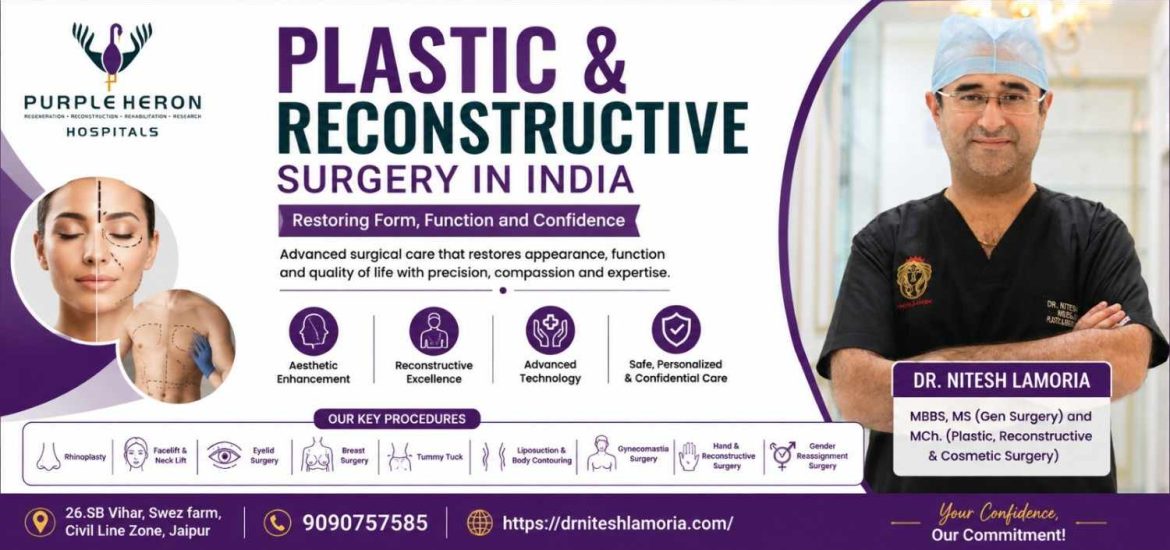
From reconstructing damaged tissues and treating complex hand injuries to facial surgery and body contouring, every procedure requires careful assessment and individualized planning. Dr. Nitesh Lamoria provides plastic, reconstructive, and cosmetic surgical care at Purple Heron Hospital, Jaipur, with an emphasis on patient safety, realistic expectations, and treatment planning based on individual needs.
Understanding Plastic and Reconstructive Surgery in India
Plastic and reconstructive surgery broadly includes two areas: reconstructive surgery and aesthetic or cosmetic surgery. Although their primary objectives may differ, both require a detailed understanding of anatomy, tissue handling, wound healing, and surgical reconstruction.
Reconstructive surgery primarily focuses on restoring structures affected by trauma, burns, congenital differences, cancer surgery, scars, or tissue loss. Depending on the condition, its purpose may be to restore movement, protect exposed structures, reconstruct missing tissue, improve function, or improve the appearance of an affected area.
Cosmetic plastic surgery, on the other hand, is generally performed to modify or refine physical features. Procedures may involve the nose, face, chest, abdomen, arms, thighs, and other body areas.
In certain situations, aesthetics and function overlap. For example, rhinoplasty may refine the shape of the nose while also addressing certain structural breathing concerns. Similarly, reconstructive surgery after an injury can focus on restoring function while achieving an appropriate appearance.
How Plastic and Reconstructive Surgery Helps Restore Form and Function
One of the important principles of Plastic and Reconstructive Surgery in India is considering how a body part functions as well as how it looks.
Patients may require reconstructive surgery following an accident, burn injury, congenital condition, cancer-related surgery, or significant tissue damage. Depending on the condition, techniques such as skin grafting, flap surgery, scar revision, microsurgery, nerve or tendon repair, and soft-tissue reconstruction may be considered.
The treatment approach differs for every patient. A hand injury, for example, requires attention to movement, sensation, grip, and tissue coverage. Facial reconstruction may require consideration of symmetry, scars, facial expression, and important functions such as breathing.
Therefore, reconstructive surgery is not based on a single technique. Treatment is selected according to the patient’s anatomy, extent of tissue damage, available healthy tissue, overall health, and functional requirements.
Plastic and Reconstructive Treatments That May Be Considered
The field covers several procedures, and the appropriate treatment depends on the patient’s concern and clinical evaluation. Some procedures that may be considered include:
- Rhinoplasty Surgery – to address selected aesthetic or structural concerns involving the nose.
- Gynecomastia Surgery – for appropriate cases of enlarged male breast tissue.
- Hand Plastic Surgery – for selected tendon, nerve, soft-tissue, scar, and traumatic hand concerns.
- Tummy Tuck Surgery – to address excess abdominal skin and certain abdominal contour concerns.
- Body Contouring Surgery – for reshaping selected areas where excess skin or localized tissue affects body contour.
- Gender Reassignment Surgery – individualized surgical procedures that may form part of gender-affirming care.
These treatment names can also serve as relevant internal links to detailed service pages, helping users learn more about individual procedures without overcrowding the main article.
Advanced Reconstructive Techniques and Microsurgery
Modern reconstructive surgery has evolved significantly with advances in microsurgery and tissue-transfer techniques. Complex tissue defects that cannot be treated through simple wound closure may require skin grafts, local or regional flaps, or free tissue transfer.
Microsurgery involves working on very small anatomical structures, such as nerves and blood vessels, with specialized magnification and instruments. It may be used in selected cases involving complex reconstruction, free-tissue transfer, nerve repair, hand injuries, and significant tissue loss.
However, advanced technology alone does not determine the outcome of treatment. Accurate diagnosis, appropriate patient selection, surgical expertise, postoperative care, and rehabilitation are also important.
Choosing a Surgeon for Plastic and Reconstructive Surgery in India
Selecting the right surgeon is an important part of the treatment journey. Patients should consider specialist qualifications, relevant surgical experience, hospital facilities, and the quality of the consultation rather than choosing solely on the basis of treatment cost or promotional claims.
During a consultation, patients should understand the proposed procedure, expected benefits, possible limitations, scars, recovery period, and potential complications. A responsible surgeon should explain realistic possibilities rather than guarantee a perfect result.
Patients can also ask about the surgeon’s experience with the specific treatment they are considering. Since plastic surgery includes many different areas, procedure-specific expertise and personalized surgical planning are important considerations.
About Dr. Nitesh Lamoria
Dr. Nitesh Lamoria is a plastic, reconstructive, and cosmetic surgeon practising at Purple Heron Hospital, Jaipur. His medical education includes MBBS, MS in General Surgery, and MCh in Plastic, Reconstructive & Cosmetic Surgery from SMS Medical College, Jaipur. He has also pursued fellowship training in Stem Cell and Regenerative Medicine through IASRM.
His practice includes facial plastic surgery, rhinoplasty, body-contouring procedures, gynecomastia surgery, hand surgery, reconstructive procedures, and gender reassignment surgery.
Dr. Nitesh Lamoria’s approach involves understanding the patient’s primary concern, evaluating anatomy and functional requirements, discussing realistic possibilities, and developing an individualized treatment plan rather than following the same surgical approach for every patient.
What to Expect Before and After Surgery
Before undergoing Plastic and Reconstructive Surgery in India, patients should provide a complete medical history, including information about previous surgeries, medications, allergies, and existing medical conditions. Depending on the procedure, blood investigations or other medical evaluations may also be required.
Patients who smoke or use nicotine should inform their surgeon because nicotine can interfere with blood supply and wound healing, which is particularly relevant to many reconstructive and plastic surgery procedures.
Recovery varies considerably according to the type and complexity of surgery. Swelling, bruising, temporary discomfort, and activity restrictions can occur following many procedures. Larger reconstructive operations may require a longer recovery period and, in some cases, rehabilitation.
Following postoperative instructions and attending scheduled follow-up appointments are important for monitoring recovery and addressing concerns appropriately.
Safety, Scarring and Realistic Expectations
Every surgical procedure carries potential risks. These can include bleeding, infection, delayed wound healing, scarring, asymmetry, changes in sensation, and anaesthesia-related complications. Certain complex procedures may carry additional risks that should be discussed individually.
Patients should also understand that any procedure involving an incision will leave a scar. Plastic surgeons generally plan incisions carefully to make scars less noticeable where reasonably possible, but completely scar-free surgery cannot be guaranteed.
Realistic expectations are equally important. The objective of surgery should be meaningful improvement in function, appearance, or both rather than an expectation of perfection.
Why Personalized Surgical Planning Matters
Two patients seeking the same procedure may have completely different anatomical features, medical histories, tissue quality, and expectations. Therefore, an individualized approach is essential.
For example, two patients considering rhinoplasty may have differences in skin thickness, cartilage strength, nasal structure, facial proportions, and breathing concerns. Similarly, reconstructive surgery after trauma must be planned according to the exact structures affected and the amount of healthy tissue available.
A detailed consultation with Dr. Nitesh Lamoria can help determine whether surgery is appropriate and which approach may be suitable based on the patient’s individual condition and goals.
Frequently Asked Questions
Is plastic and reconstructive surgery only for cosmetic purposes?
No. Reconstructive surgery can also be used to address tissue damage, functional problems, trauma, burns, congenital conditions, scars, and defects resulting from certain medical conditions or previous surgery.
How do I choose a plastic and reconstructive surgeon in India?
Consider relevant specialist qualifications, experience with the procedure you require, hospital facilities, patient-safety practices, and whether the surgeon clearly explains expected outcomes, limitations, recovery, and possible risks.
How long does recovery take after plastic and reconstructive surgery?
Recovery depends on the type and complexity of the procedure. Some surgeries have relatively shorter recovery periods, whereas complex reconstructive procedures may require several weeks or longer and can involve rehabilitation.
Conclusion
Plastic and Reconstructive Surgery in India brings together medical science, surgical precision, aesthetic understanding, and reconstructive principles to address a variety of functional and physical concerns. Whether surgery is required following trauma, for reconstruction, to correct a structural concern, or for aesthetic improvement, successful treatment begins with careful evaluation, appropriate surgical planning, and realistic expectations.
At Purple Heron Hospital, Jaipur, Dr. Nitesh Lamoria provides individualized plastic and reconstructive surgical care based on each patient’s anatomy, medical requirements, functional needs, and treatment goals. Patients from Jaipur as well as other parts of India can consult Dr. Nitesh Lamoria to understand the appropriate treatment options for their specific concerns.
Book a Consultation with Dr. Nitesh Lamoria
If you are considering plastic or reconstructive surgery, schedule a consultation with Dr. Nitesh Lamoria for a detailed evaluation and personalized treatment plan.
Dr. Nitesh Lamoria
Plastic, Reconstructive & Cosmetic Surgeon
Purple Heron Hospital, Jaipur
📍 Address: 26.SB Vihar, Swez farm, Civil Line Zone, jaipur – 302019
📞 Phone: +91 90907 57585
🌐 Website: drniteshlamoria.com