Body Contouring in Jaipur: Understanding Liposuction, Tummy Tuck and Body Lift
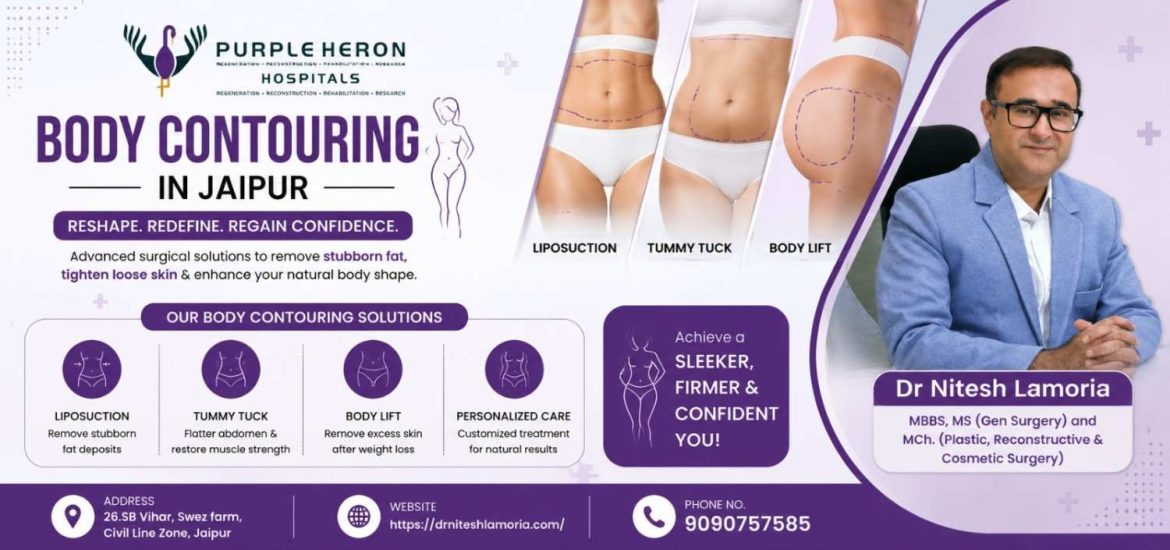
Body Contouring in Jaipur includes surgical procedures designed to reshape specific areas of the body by addressing concerns such as localized excess fat, loose skin, and changes in body contours. Even after maintaining a healthy lifestyle or achieving significant weight loss, some people may have areas that do not improve adequately through diet and exercise alone.
Procedures such as liposuction, tummy tuck, and body lift address different concerns. Therefore, choosing the right procedure requires a detailed assessment of skin elasticity, fat distribution, body proportions, medical history, and individual goals.
At Purple Heron Hospital, Dr. Nitesh Lamoria provides individualized assessment and surgical planning for patients considering body contouring procedures. Understanding how these procedures differ can help patients develop realistic expectations and make informed decisions.
What Is Body Contouring?
Body contouring refers to a group of procedures that aim to improve the shape and proportions of specific body areas. It is important to understand that body contouring is not primarily a weight-loss treatment.
Instead, these procedures may address:
- Localized pockets of excess fat
- Loose or sagging skin
- Changes after significant weight loss
- Abdominal skin and tissue laxity
- Disproportionate body contours
- Changes following pregnancy
- Areas that remain resistant to lifestyle measures
The appropriate procedure depends on whether the primary concern involves fat, excess skin, weakened abdominal tissues, or a combination of these factors.
Body Contouring in Jaipur: Which Procedure May Be Appropriate?
When considering Body Contouring in Jaipur, patients should understand that liposuction, tummy tuck, and body lift serve different purposes. One procedure cannot automatically replace another.
A surgeon may evaluate:
- Amount and location of excess fat
- Degree of loose or sagging skin
- Skin elasticity
- Abdominal wall condition
- Previous surgeries
- Overall health
- Weight stability
- Individual aesthetic goals
Based on these factors, the surgeon can determine whether a single procedure or a combination of procedures may be appropriate.
1. Liposuction: Targeting Localized Fat Deposits
Liposuction is a surgical body contouring procedure used to remove localized deposits of subcutaneous fat. It can help reshape selected areas when fat persists despite healthy lifestyle efforts.
Common treatment areas may include:
- Abdomen
- Waist and flanks
- Hips
- Thighs
- Upper arms
- Back
- Chin and neck
- Selected chest areas
During liposuction, the surgeon uses a thin tube called a cannula to remove targeted fat through small incisions.
What Liposuction Cannot Do
Patients should understand the limitations of liposuction. It is not a substitute for weight loss and does not primarily treat significant loose skin.
If a patient has poor skin elasticity or substantial skin laxity, removing fat alone may not produce the desired contour. In such cases, a skin-removal or tightening procedure may need consideration.
2. Tummy Tuck: Addressing the Abdominal Area
A tummy tuck, medically known as abdominoplasty, focuses on the abdomen. It removes selected excess skin and fat and may also address abdominal wall laxity when clinically appropriate.
People may consider a tummy tuck after:
- Pregnancy
- Significant weight loss
- Development of loose abdominal skin
- Changes in abdominal contour
- Persistent lower abdominal skin folds
During surgery, the surgeon removes excess abdominal skin according to the treatment plan. The procedure may also involve repair or tightening of separated or weakened abdominal muscles where appropriate.
Liposuction vs Tummy Tuck
Although people sometimes use these terms interchangeably, the procedures are different.
Liposuction primarily targets localized fat.
Tummy tuck primarily addresses excess abdominal skin and may correct abdominal wall laxity.
Some patients have both localized fat and significant skin laxity. After evaluation, a surgeon may discuss whether combining techniques is appropriate.
3. Body Lift After Significant Weight Loss
Major weight loss can provide substantial health benefits, but stretched skin may not always contract completely afterward. This can leave loose folds of skin around different areas of the body.
A body lift is designed to remove selected excess skin and improve body contours in suitable patients.
Depending on the patient’s needs, treatment may involve areas such as:
- Abdomen
- Waist
- Lower back
- Buttocks
- Outer thighs
A lower body lift, for example, may address loose tissues around several connected areas of the lower torso.
Because body lift surgery can be more extensive than localized procedures, careful patient selection and surgical planning are particularly important.
Who May Be a Suitable Candidate for Body Contouring?
Suitability depends on the procedure and individual medical circumstances. In general, potential candidates may include adults who:
- Have maintained a relatively stable weight
- Have localized excess fat or skin
- Have realistic expectations
- Are in suitable general health for elective surgery
- Understand the procedure and recovery
- Can follow postoperative instructions
- Do not view body contouring as a substitute for weight management
For people who have undergone substantial weight loss, maintaining a stable weight before surgery can be particularly important.
Why Weight Stability Matters
Body contouring reshapes existing tissues, but significant weight fluctuations after surgery can change the results.
For this reason, patients should ideally be close to a maintainable weight before considering elective contouring surgery.
Weight stability can help with:
- More predictable surgical planning
- Better assessment of remaining loose skin
- Long-term maintenance of body proportions
- Determining which areas genuinely require contouring
Patients planning major future weight loss should discuss timing with their surgeon.
What Happens During a Body Contouring Consultation?
A consultation provides an opportunity to determine whether surgery is appropriate and which procedure may best address the patient’s concerns.
The assessment may cover:
- Current health and medical conditions
- Previous operations
- Current medications
- Weight history
- Pregnancy history where relevant
- Areas of concern
- Skin quality
- Fat distribution
- Existing scars
- Expectations from surgery
The surgeon should also discuss potential benefits, limitations, scars, recovery requirements, and possible risks.
Body Contouring with Dr. Nitesh Lamoria
Dr. Nitesh Lamoria holds MBBS, MS (General Surgery), and MCh (Plastic, Reconstructive & Cosmetic Surgery) qualifications and provides plastic and reconstructive surgical care.
At Purple Heron Hospital, Jaipur, body contouring treatment begins with an individualized assessment. Rather than selecting a procedure based only on the name of the treatment, the evaluation considers the patient’s anatomy, skin laxity, fat distribution, health, and desired changes.
Depending on these findings, patients may discuss procedures such as liposuction, tummy tuck, body lift, or another suitable contouring approach.
Recovery After Body Contouring Surgery
Recovery varies considerably according to the type and extent of surgery. Liposuction of a limited area, for example, generally involves a different recovery process from an extensive body lift.
During recovery, patients may experience temporary:
- Swelling
- Bruising
- Tightness or discomfort
- Changes in sensation
- Activity restrictions
The surgical team may recommend compression garments for certain procedures. Patients should also follow instructions regarding wound care, medications, physical activity, bathing, and follow-up appointments.
Returning to exercise or strenuous work too early may interfere with recovery. Therefore, patients should follow their surgeon’s individualized timeline.
Understanding Scars and Results
Any procedure involving surgical incisions can leave scars. The location and length depend on the procedure performed.
Plastic surgeons generally plan incisions with the aim of placing scars strategically where possible. However, scar appearance varies according to genetics, skin characteristics, wound healing, and the type of operation.
Results also develop gradually. Swelling may temporarily affect the appearance of the treated area, and the final contour can take time to become apparent.
Risks and Safety Considerations
Like all surgical procedures, body contouring carries potential risks. These can vary depending on the operation and the patient’s health.
Possible complications can include:
- Bleeding
- Infection
- Fluid accumulation
- Delayed wound healing
- Changes in sensation
- Scarring
- Contour irregularities
- Anaesthesia-related complications
- Blood clots and other procedure-specific risks
A qualified surgeon should explain relevant risks during consultation and discuss steps taken to reduce them.
Maintaining Results After Body Contouring
Surgery can reshape specific areas, but long-term lifestyle habits remain important.
Patients can support their results by:
- Maintaining a relatively stable weight
- Following a balanced diet
- Staying physically active after medical clearance
- Avoiding smoking
- Following postoperative instructions
- Attending recommended follow-up appointments
Future pregnancy, ageing, and substantial weight changes may alter body contours over time.
Conclusion
Body Contouring in Jaipur can involve different surgical procedures depending on whether the primary concern is localized fat, loose skin, abdominal laxity, or changes following major weight loss. Liposuction primarily removes targeted fat, a tummy tuck addresses excess abdominal skin and may correct abdominal wall laxity, while a body lift can address more extensive loose tissues after significant weight loss.
At Purple Heron Hospital, Dr. Nitesh Lamoria assesses individual anatomy, medical history, skin condition, and treatment goals before discussing an appropriate surgical approach.
Rather than choosing a procedure based solely on its popularity, patients should seek a detailed consultation, understand potential benefits and risks, and maintain realistic expectations about recovery and results.
Frequently Asked Questions
1. Which procedure is best for Body Contouring in Jaipur?
There is no single best procedure for everyone. Liposuction may suit patients whose main concern is localized fat with adequate skin elasticity, while a tummy tuck may be considered for excess abdominal skin and abdominal wall laxity. A body lift may suit selected patients with more extensive loose skin, particularly after major weight loss.
2. Is body contouring the same as weight-loss surgery?
No. Body contouring is not designed as a primary treatment for obesity or significant weight loss. It reshapes selected areas by addressing localized fat, loose skin, or tissue laxity. Patients generally achieve better planning when they are at a relatively stable and maintainable weight.
3. How long does recovery take after body contouring?
Recovery depends on the procedure, number of areas treated, overall health, and individual healing. Smaller procedures may require less recovery than extensive operations such as a body lift. Your surgeon can provide a personalized recovery timeline after evaluating the planned procedure.